Area + access
Measured floor, edges, stem walls, stairs, obstacles, equipment access, and project minimums.
Straight talk on pricing
Online averages often omit the very work that determines whether a coating succeeds. A credible estimate starts with measured area, concrete condition, preparation, repairs, named system layers, finish, details, and access.
Published Updated
The five cost drivers
Measured floor, edges, stem walls, stairs, obstacles, equipment access, and project minimums.
Cracks, spalling, weak concrete, contamination, moisture indicators, and old patching.
Removal, mechanical profile, cleaning, repairs, masking, detail work, and disposal.
Primer or base, body layer, broadcast, topcoat, compatibility, and application conditions.
Flake blend, coverage, texture, gloss, custom details, phasing, and return-to-use needs.
Quote anatomy
If an item is important to the outcome, it should not exist only as a verbal assumption. Ask for clarification before signing.
Use the garage coating selection guide to define your priorities, then check the proposed layers against the epoxy and polyaspartic comparison.
When bids arrive, open the garage floor quote decoder to inspect each line and print a three-quote comparison worksheet.
Floor area plus vertical faces, steps, borders, coves, or other details.
The method, old-material removal, cleaning, and surface-profile plan.
Included cracks, spalls, joints, patches, and limits around future movement.
Manufacturer and product for every primer, base, broadcast, grout, and top layer.
Color, flake blend, broadcast density, texture, and gloss expectation.
Application assumptions and written foot/vehicle return-to-use guidance.
Masking, dust plan, access, owner preparation, debris, and cleanup responsibility.
What is not included, change-order triggers, warranty provider, and written limitations.
Make the scope visible
Use this illustration as a reading order, then work through the full decoder for the exact questions behind each field.
Open the quote decoder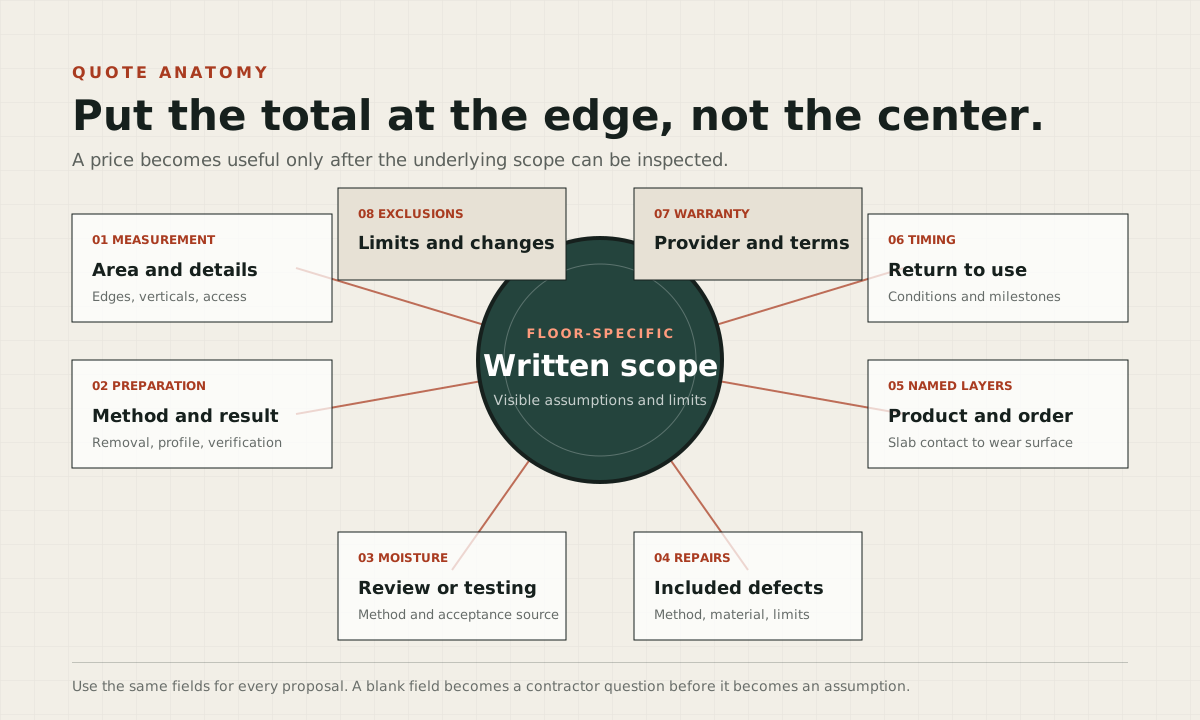
Illustrative quote anatomy
The same eight fields can expose whether two proposals describe the same work. Any blank field becomes a written question instead of an assumption.
Low-quote audit
A lower price is not automatically a problem. It becomes a problem when the scope is too vague to understand the tradeoff.
Before requesting a quote
Approximate dimensions or vehicle capacity, how you use the garage, and what stays in the space.
Cracks, scaling, oil, dampness, previous coating or sealer, and any repair or water history.
Color direction, flake preference, texture needs, desired timing, and any deadline or access constraint.
Straight answers
Published averages usually omit preparation, repairs, minimum charges, and scope differences, which creates false precision. We publish only figures we can verify, so this page focuses on the factors and the checklist that make real quotes comparable.
It can help normalize genuinely comparable scopes, but it can hide minimum charges, repair work, edges, removal, access, layer differences, and exclusions. Compare the written work first.
Mobilization, equipment, detail work, setup, minimum material quantities, and fixed administrative costs are spread across less area. Exact pricing belongs to the contractor quote.
Repair scope depends on crack type, quantity, access, movement, and the selected system. Make sure the quote states which repairs are included and what future movement is excluded.
Choose only after normalizing measured area, preparation, removal, repairs, named products, number of layers, decorative coverage, details, exclusions, schedule guidance, and warranty. A low number can be fair, or it can be a different scope.
Project-specific guidance
Share approximate size, slab condition, use, finish direction, and timing. We may ask for photos during follow-up to see where a closer assessment is needed.