A cleaner-feeling space
A continuous finished surface is simpler to sweep and maintain than porous, dusty concrete. The actual cleaning routine still depends on texture and use.
Garage coating selection guide
A well-planned garage floor coating can make concrete easier to clean, reduce surface dust, and give the whole space a more finished feel. The right specification depends on the concrete below it, Minnesota temperature swings, sunlight, vehicle use, and the finish you want.
Published Updated
Why people consider it
A continuous finished surface is simpler to sweep and maintain than porous, dusty concrete. The actual cleaning routine still depends on texture and use.
Color, flake coverage, and texture can be selected around visibility, traction preferences, and how you actually use the garage.
Cracks, spalling, old coatings, oil contamination, and moisture deserve attention before a system is proposed or a quote is finalized.
Understanding the base coat, broadcast layer, and topcoat makes competing quotes easier to compare than relying on “epoxy” as a catch-all label.
Likely fit
Pause and assess
System variables
SPEC 01
Age, hardness, cracks, spalling, contamination, moisture indicators, and previous products all affect preparation and system choice.
SPEC 02
Sun at the garage door, road salt, wet tires, temperature, and chemical contact can influence which layers make sense.
SPEC 03
Parking, woodworking, home-gym equipment, storage, or a working shop create different wear and texture priorities.
SPEC 04
Solid color, partial or full flake, gloss level, and texture change appearance, cleaning, and the total scope.
See the scope
These are planning diagrams, not product specifications. Use them to ask what each proposal includes and how the installer will verify the prepared surface. Then use the Minnesota coating window to plan condition questions and the coating specification database to keep named product values tied to their dated sheets.
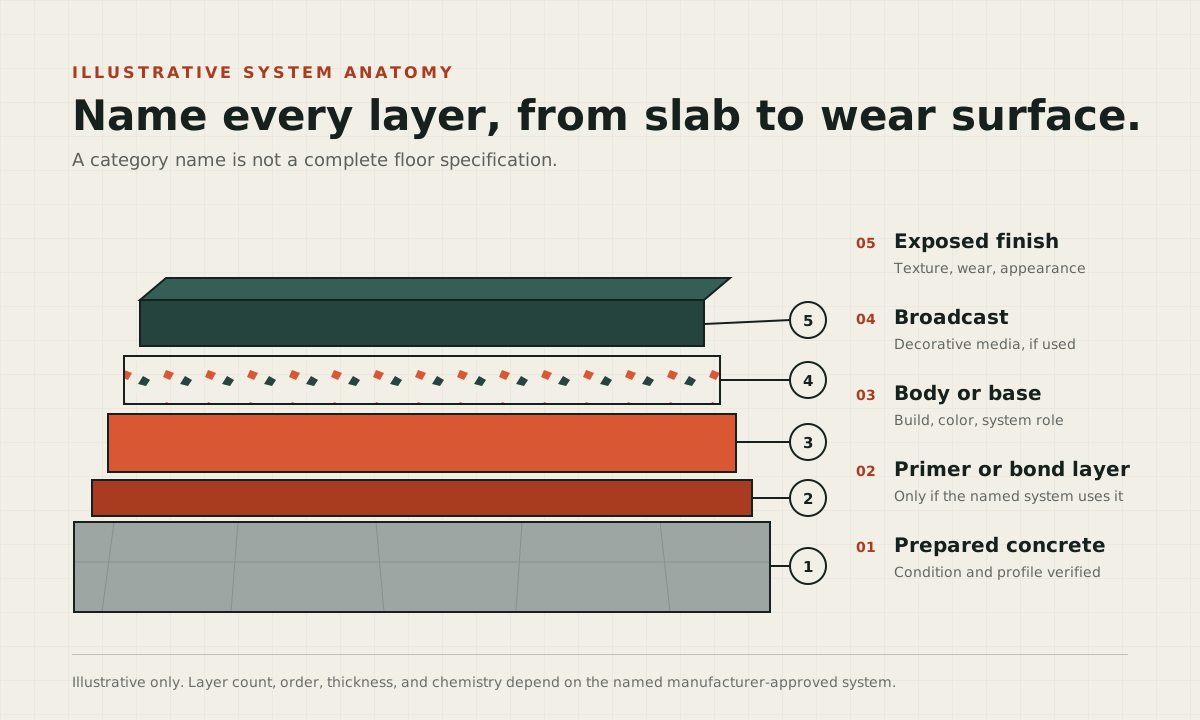
Illustrative layer stack
A real system may use a different number, order, thickness, or chemistry of layers. Ask for the manufacturer and product at every step, including the material touching concrete and the exposed wear surface.
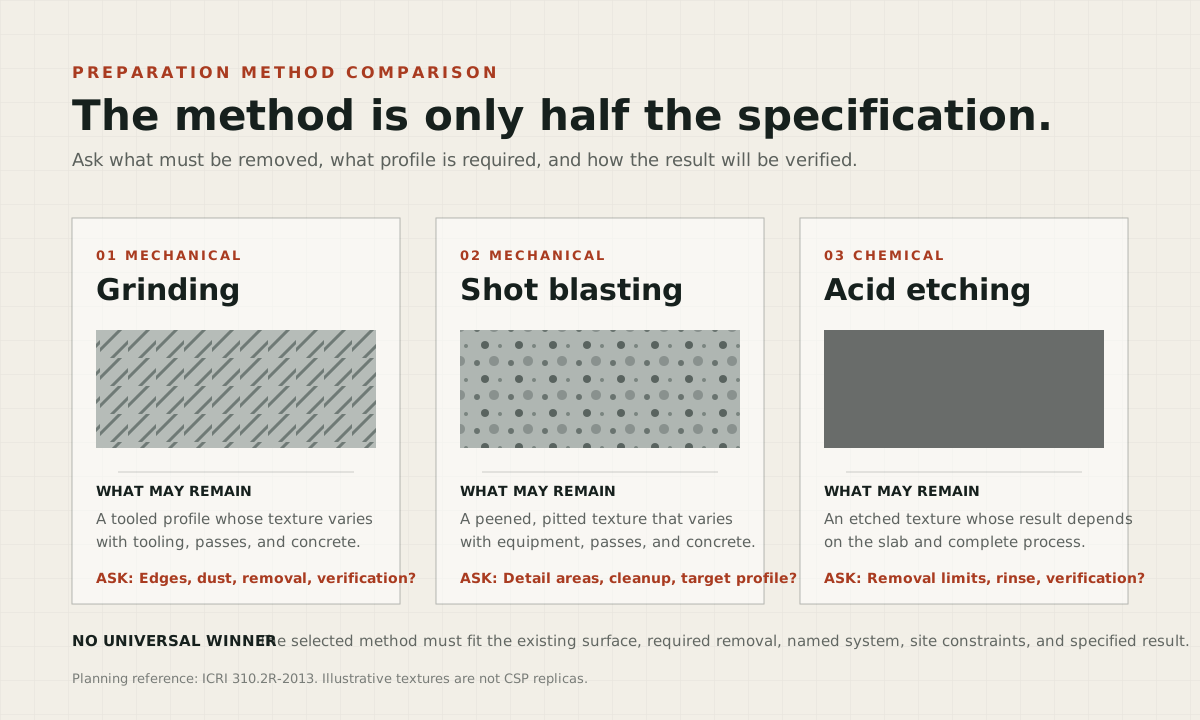
Illustrative preparation comparison
Preparation selection depends on the existing surface, required removal, named coating system, site constraints, and specified result. The textures shown are illustrative and are not Concrete Surface Profile replicas.
Reference: ICRI 310.2R, edition 2013. Accessed August 12, 2026.
A responsible process
Review concrete condition, existing products, repairs, drainage, moisture clues, and how the space is used.
Mechanically prepare the surface as the selected system requires, then address cracks or damage included in the scope.
Apply the specified primer or base layer, decorative broadcast if selected, and compatible finish layers.
Follow the product-specific return-to-use instructions supplied by the installing contractor.
Keep researching
Straight answers
Neither label is universally better. Sun exposure, slab condition, temperature during application, desired return-to-use timing, and the exact products in the full system all matter. Use the side-by-side comparison to prepare for an on-site recommendation.
Many cracks can be prepared and repaired as part of the project, but the cause and movement matter. A cosmetic repair cannot guarantee that a moving crack will never show again, so the contractor should explain what the repair scope does and does not cover.
Existing coatings and sealers must be identified and checked for compatibility and adhesion. Removal may be appropriate when the old layer is failing or unsuitable, but that decision belongs in the preparation plan.
Service life varies with substrate quality, preparation, system design, traffic, sunlight, maintenance, and damage. Ask installers to tie any durability or warranty statement to the named product system and the written scope.
Look for measured area, preparation method, repairs, named coating layers, flake or finish selection, exclusions, return-to-use guidance, and written warranty terms if offered. Our cost guide has a full checklist.
Project-specific guidance
Tell us how you use the space, what the concrete looks like, and when you hope to begin. We review the details and contact you about next steps.